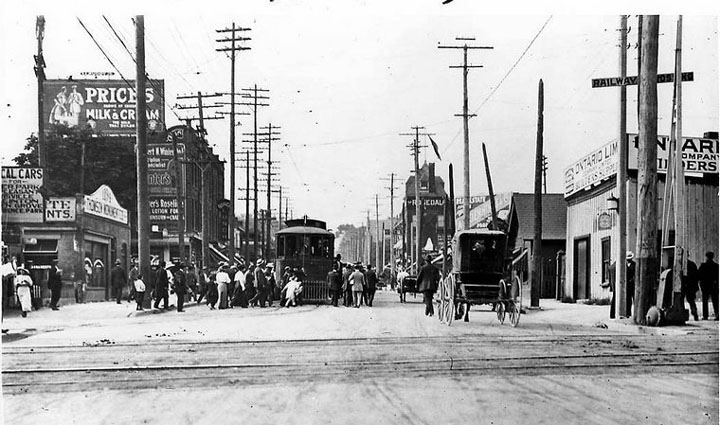
 In the late 19th and early 20th centuries the suburban streetcar line on north Yonge Street was owned by William Mackenzie’s Toronto and York Radial Railway Company. The southern terminus was at the CPR crosstown tracks, where passengers transferred to the city-owned Toronto Railway Company’s streetcars and paid an additional fare to downtown Toronto. Relations were not good between the two, and over the years “battles had flared up between city and company over fares, Sunday cars, service, roadbeds, rental fees, and Metropolitan line track links with both the CPR and the TRC on Yonge Street”. Many politicians and ratepayers “looked forward to that great day in 1921 when Mackenzie’s 30-year franchise would expire”. In the late 19th and early 20th centuries the suburban streetcar line on north Yonge Street was owned by William Mackenzie’s Toronto and York Radial Railway Company. The southern terminus was at the CPR crosstown tracks, where passengers transferred to the city-owned Toronto Railway Company’s streetcars and paid an additional fare to downtown Toronto. Relations were not good between the two, and over the years “battles had flared up between city and company over fares, Sunday cars, service, roadbeds, rental fees, and Metropolitan line track links with both the CPR and the TRC on Yonge Street”. Many politicians and ratepayers “looked forward to that great day in 1921 when Mackenzie’s 30-year franchise would expire”.
Looking north in 1912, showing a radial car at Birch
The section between Farnham and Birch expired even sooner, on June 25, 1915. Realizing that the city would not extend the franchise, the company decided to buy their own right-of-way behind the buildings on the west side of Yonge, from Farnham to Birch. They did a substantial amount of demolition and construction while the city looked for ways to stop them. The city eventually prevailed and the company had to abandon the project, having spent a lot of money.
.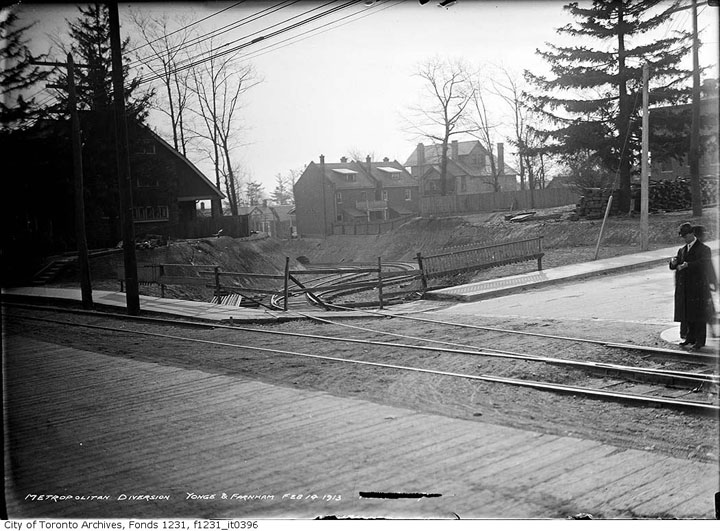
The diversion of the Metropolitan Line of the Toronto and York Radial Railway, at the southwest corner of Yonge and Farnham
.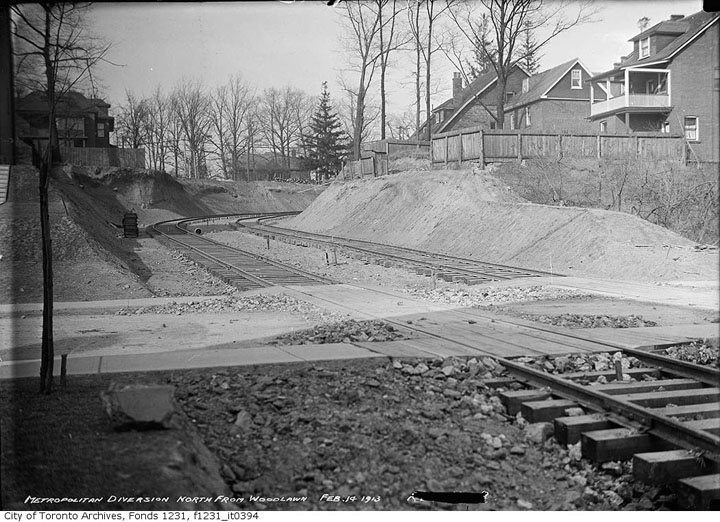
The diversion looking north from Woodlawn, 1913
.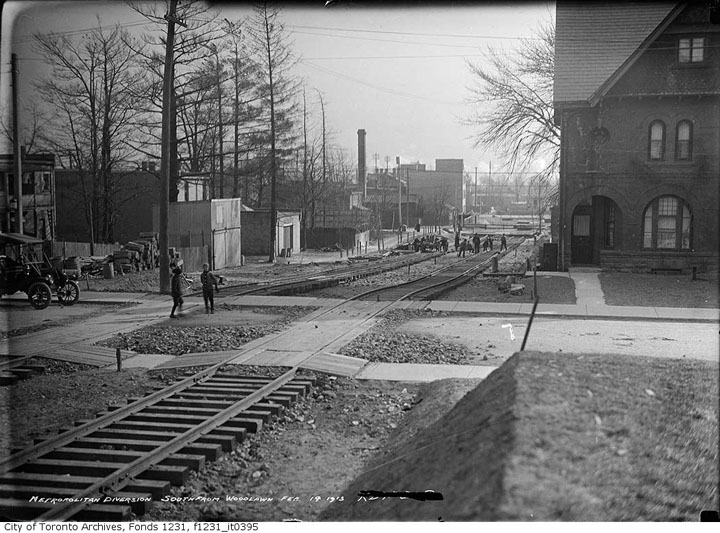
Diversion looking south from Woodlawn, 1913
At midnight on June 25, 1915 the charter for the section below Farnham expired. At the stroke of midnight the city moved in and tore up the tracks from Farnham to the CPR crossing. “We decided on this policy a month ago”, Mayor Tommy Church told the amazed crowd of onlookers.
 The Toronto and York hastily erected a temporary waiting room at Farnham and Yonge and resumed service. North Toronto commuters now had to walk the 400 metres to the TRC’s terminus at Price Street, or pay a third fare to ride the unauthorized jitneys that started operating. The Toronto and York hastily erected a temporary waiting room at Farnham and Yonge and resumed service. North Toronto commuters now had to walk the 400 metres to the TRC’s terminus at Price Street, or pay a third fare to ride the unauthorized jitneys that started operating.
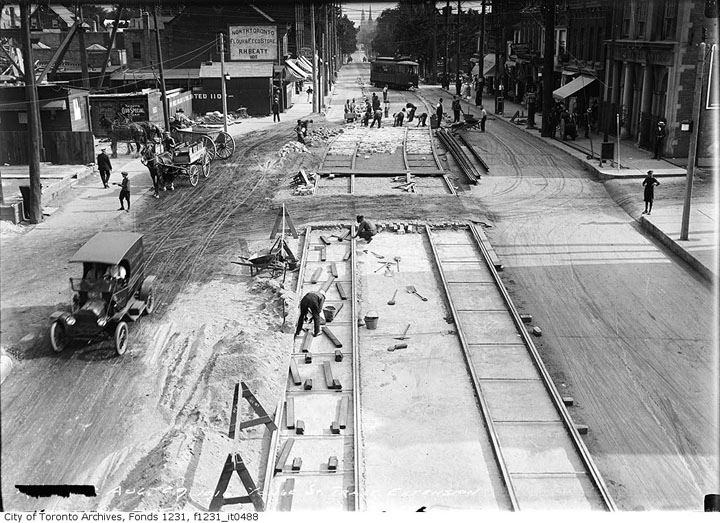
In early 1916 the city complied with a directive by the Ontario Railway and Municipal Board to provide service over this stretch. They extended the TRC route through a new subway under the CPR tracks to a wye turnaround at Woodlawn. But a gap remained since Woodlawn was one block south of Farnham.
Looking south from Price Street, 1916, showing a TRC streetcar reversing direction, and work extending the line north.
In a series of plebiscite votes, Toronto ratepayers approved a city takeover of Mackenzie’s network in 1921, and all public services were placed under a new body called the Toronto Transportation Commission. We can credit this fiasco in our neighbourhood as a major impetus to consolidating all public transit into a city owned agency.
 Quotes are from the book: Quotes are from the book:
Riding the Radials
Robert M. Stamp
Boston Mills Press, 1989
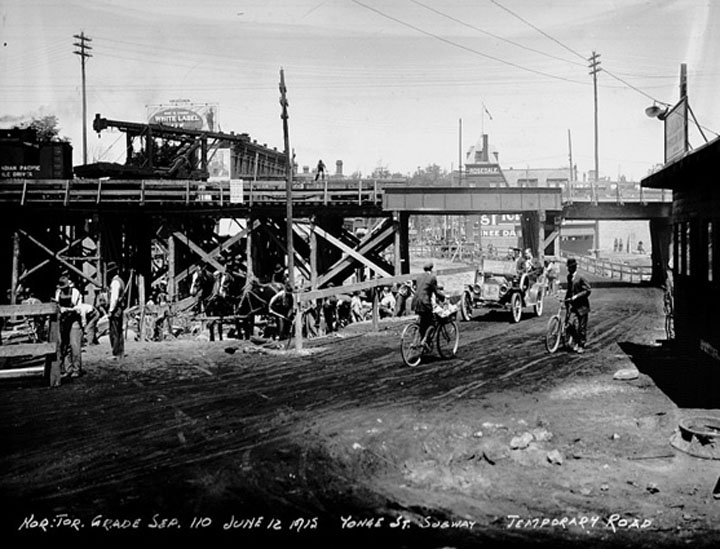
In 1915 traffic was detoured on Yonge as the railway overpass was constructed. This view is looking north.
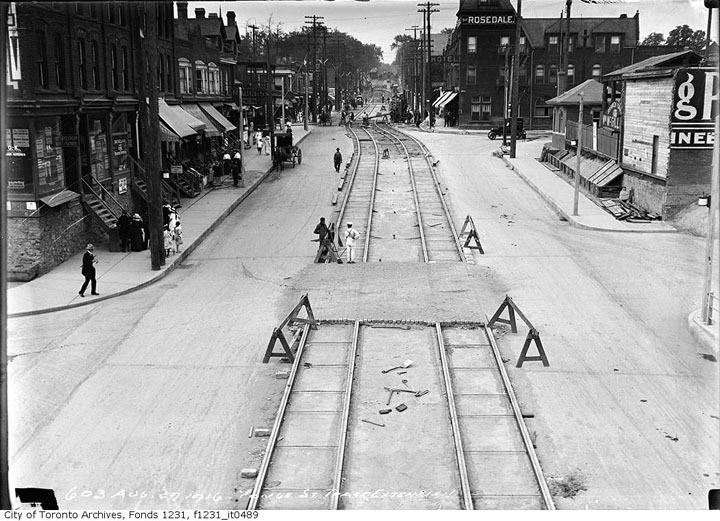
This view is taken from the CPR overpass in 1916 and shows progress of the streetcar tracks heading north. Notice how Yonge has been lowered to go under the CPR. so stairs are required to get to the ground floor of the buildings north of Birch. What was the basement is today the ground floor for shops such as the Joseph's Hairstyling and the real estate office.
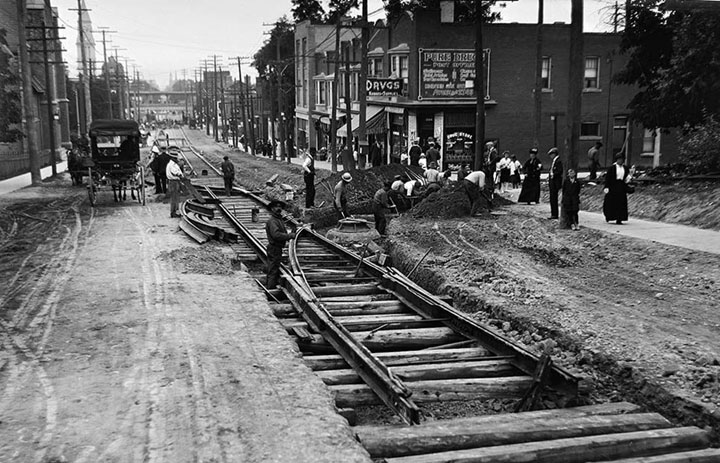
Another view of track work in 1916. The drug store is on the corner of Woodlawn and across the street is Yonge Street Methodist Church, later Yonge Street United Church, which burned and was torn down in 1971.
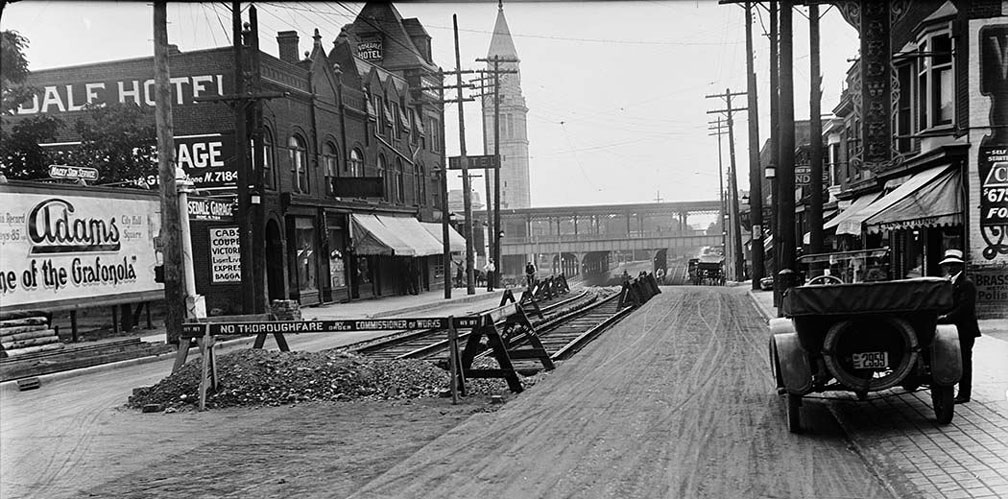
A final view of track work on Yonge in 1916. The Rosedale Hotel is on the left and Alcorn intersects on the right. Further south you can see the dip where Yonge was lowered and the CPR bridge with canopies to protect passengers waiting to board the trains. I will have more on the CPR station on the next page.
|
